
Community
Stars attend world premiere of 'Hexed' in Hollywood
By Katherine Langford
Advertisement · Why this ad?
Katherine oversees editorial operations across all six brands. Before joining The Meridan Group, she spent 14 years at the Minneapolis Star Tribune, where she led the metro desk through its digital transformation. She holds a Master's in Journalism from Northwestern's Medill School.
More from Katherine →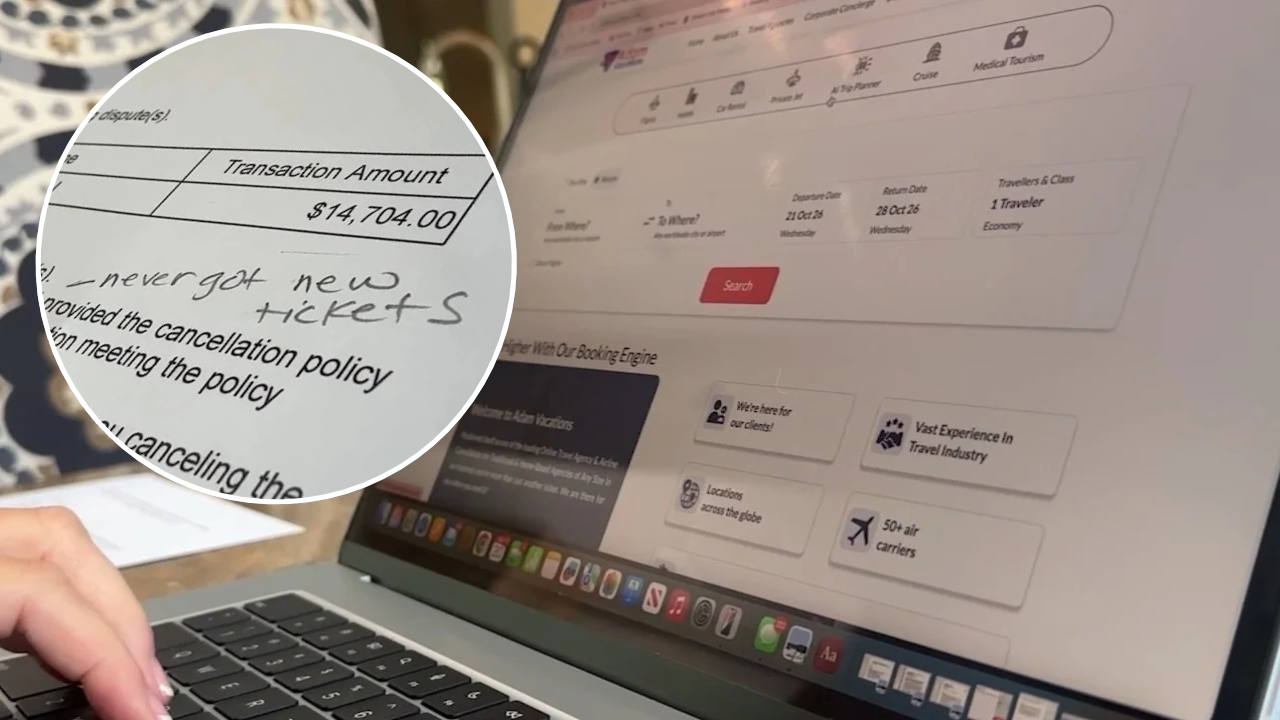
The promise of a dream vacation can be a powerful lure, especially when meticulously planned and anticipated. For Pleasanton resident Kristen Stedman, that dream—a 25th wedding anniversary trip to Portugal—turned into a nightmare after she fell victim to a sophisticated online scam, losing $14,704 in the process. The incident, triggered by a seemingly innocuous Google search for TAP Air Portugal’s customer service number, serves as a stark reminder of the ever-present threat of online fraud and the importance of vigilance even when dealing with familiar institutions. This is a particularly painful lesson for families who have invested time and resources into building a secure future, only to see those savings eroded by the relentless ingenuity of criminals.
Kristen Stedman and her husband had carefully planned a trip to Portugal, selecting TAP Air Portugal for its direct flights from San Francisco. Opting for first class to mark their special anniversary, they received email confirmations and tickets that appeared legitimate. However, when Stedman attempted to verify her seat selections, she initiated a Google search for TAP Air Portugal’s customer service number. This search inadvertently connected her to scammers who impersonated airline representatives and a third-party travel agency called Adam Vacations. The scammers convinced Stedman that her flight had been canceled due to a system glitch and offered to rebook her at a discounted rate through Adam Vacations, claiming they were a consolidator and travel agency.
According to Stedman, the scammers presented emails with the TAP Air Portugal logo, further reinforcing the illusion of legitimacy. She says she was skeptical initially, but her doubts were momentarily quelled by finding Adam Vacations listed as a reputable agency during her own online research. “I was skeptical of this,” Stedman said. “While we were on the phone with them, we were Googling Adam Vacations, and they were coming up as a very reputed travel agency, so we started thinking this was actually valid.” After agreeing to the rebooking, Stedman received further emails seemingly from TAP Air Portugal confirming the refund and new fare. The entire ordeal consumed approximately 60 to 80 hours of Stedman's time as she attempted to resolve the situation. When she finally contacted TAP Air Portugal directly, she learned her original reservation was valid and her flight had not been canceled. “My original reservation was alive and well,” Stedman said.
Following the realization that she had been scammed, Stedman disputed the charge with Chase Bank and submitted supporting documentation. Two months later, Chase denied her claim, citing a report submitted by Adam Vacations. This report contained numerous errors, including incorrect names listed on the tickets and an altered email. “If they would have just done a little digging, they would've seen this was an impersonation scam,” Stedman said. Feeling dismissed, she reached out to 7 On Your Side, which she says was the first entity to advocate for her case. The intervention by 7 On Your Side prompted Adam Vacations to refund Stedman $14,704.
Adam Vacations released a statement to 7 On Your Side: “Adam Vacations takes consumer concerns and allegations involving airline bookings, payment transactions, and customer communications very seriously. We appreciate the opportunity to review the concerns raised by your viewer. Based on the information currently available to us, the booking appears to have been handled through a sub-agent associated with Adam Vacations.” TAP Air Portugal has not responded to requests for comment.
The Stedman case is not an isolated incident. The Federal Trade Commission (FTC) reports that impostor scams were the most frequently reported type of fraud last year, with reported losses increasing nearly three times since 2020 FTC.gov. These scams often exploit trust and familiarity, preying on victims' desire for convenience and efficiency. The increasing sophistication of these scams, coupled with the ease of online communication, makes them a persistent threat to consumers of all ages and backgrounds.
The incident involving Kristen Stedman has resonated throughout the Pleasanton community and the broader East Bay region. Local businesses have reported similar incidents, highlighting the vulnerability of residents to online fraud. The Pleasanton Police Department encourages residents to remain vigilant when conducting online transactions and to verify information directly with official sources City of Pleasanton Police Department. The Chamber of Commerce has launched a campaign to educate the community on how to avoid such fraudulent activities, emphasizing the importance of contacting official sources directly.
What struck me most about Kristen Stedman’s experience is the sheer level of sophistication involved. These weren’t amateur scammers; they meticulously crafted a scenario, exploited a common online behavior—searching for customer service numbers—and leveraged the credibility of a seemingly reputable travel agency. It's a chilling reminder that even the most careful individuals can be vulnerable to these schemes. The fact that Chase Bank initially denied her claim, requiring intervention from a news organization, is deeply concerning. It speaks to a broader issue of institutions prioritizing efficiency and minimizing risk over thoroughly investigating potentially fraudulent activity.
This case highlights the importance of strengthening families’ financial literacy and encouraging open communication about online safety. While technology offers incredible conveniences, it's essential to instill in our children and grandchildren a healthy skepticism and a commitment to verifying information through official channels. The erosion of trust in institutions, combined with the increasing complexity of online interactions, demands a renewed emphasis on personal responsibility and community support. The Stedman's story is a call to action – a reminder that we all have a role to play in safeguarding our neighbors and protecting the values that underpin our society.
For those seeking assistance or information regarding online scams and fraud, the following resources are available: The Federal Trade Commission (FTC) provides consumer education materials and accepts reports of fraud FTC.gov. The 7 On Your Side consumer hotline, a free mediation service for Bay Area residents, offers assistance with consumer-related issues, though it cannot handle cases involving family law, criminal matters, or medical issues ABC7 News. Chase Bank offers fraud prevention resources and guidance for customers Chase Bank Security. TAP Air Portugal's official website provides contact information and customer service resources TAP Air Portugal. Residents can also report suspected scams to the Pleasanton Police Department City of Pleasanton Police Department.
The incident involving Kristen Stedman serves as a cautionary tale for all residents of Pleasanton and the broader East Bay. While the community is known for its affluence and security, it is not immune to the pervasive threat of online fraud. By remaining vigilant, verifying information through official channels, and supporting initiatives that promote financial literacy, we can collectively strengthen our defenses against these malicious actors and protect the well-being of our families and neighbors.
7 On Your Side’s consumer hotline is a free consumer mediation service for those in the San Francisco Bay Area. We assist individuals with consumer-related issues; we cannot assist on cases between businesses, or cases involving family law, criminal matters, landlord/tenant disputes, labor issues, or medical issues. Please review our FAQ here ABC7 News. As a part of our process in assisting you, it is necessary that we contact the company / agency you are writing about. If you do not wish us to contact them, please let us know right away, as it will affect our ability to work on your case. If we are able to assist, we will reach back out to you.
By Katherine Langford

By Marcus Chen

By Katherine Langford

By Katherine Langford